Rebuilding How Employers Discover, Evaluate and Buy Recruiting Products
CASE STUDY
Revenue was flattening because small-business buyers purchased once and disappeared. I built CareerBuilder's first subscription model to keep the relationship intact between hiring cycles: 300% conversion and $3.4 million in projected annual revenue within two months.
Market Challenge
I stepped into a newly created role leading CareerBuilder's employer digital business, bringing the website, e-commerce and the systems that connected content to action under one direction.
The employer site had grown across multiple business units, with content, product information and e-commerce operating as separate parts of the business. Customers could move from educational content to product discovery to purchase, but those experiences were not designed or managed as one connected journey, and that fragmentation limited both the customer experience and our ability to manage the channel as a growth business.
As Senior Product Director, Web & E-Commerce, I took ownership of B2B digital acquisition and e-commerce, including the roadmap, budget and P&L, and led a dedicated team across product, UX, web analytics and engineering.
The opportunity was to connect the full employer journey, from the first search or piece of content through product evaluation, pricing, purchase and retention, while rebuilding the systems needed to support it.
Rebuilding the Employer Acquisition and Commerce System
We rebuilt the employer experience around one connected journey: content and search, product discovery, evaluation, pricing and packaging, purchase, recovery, retention.
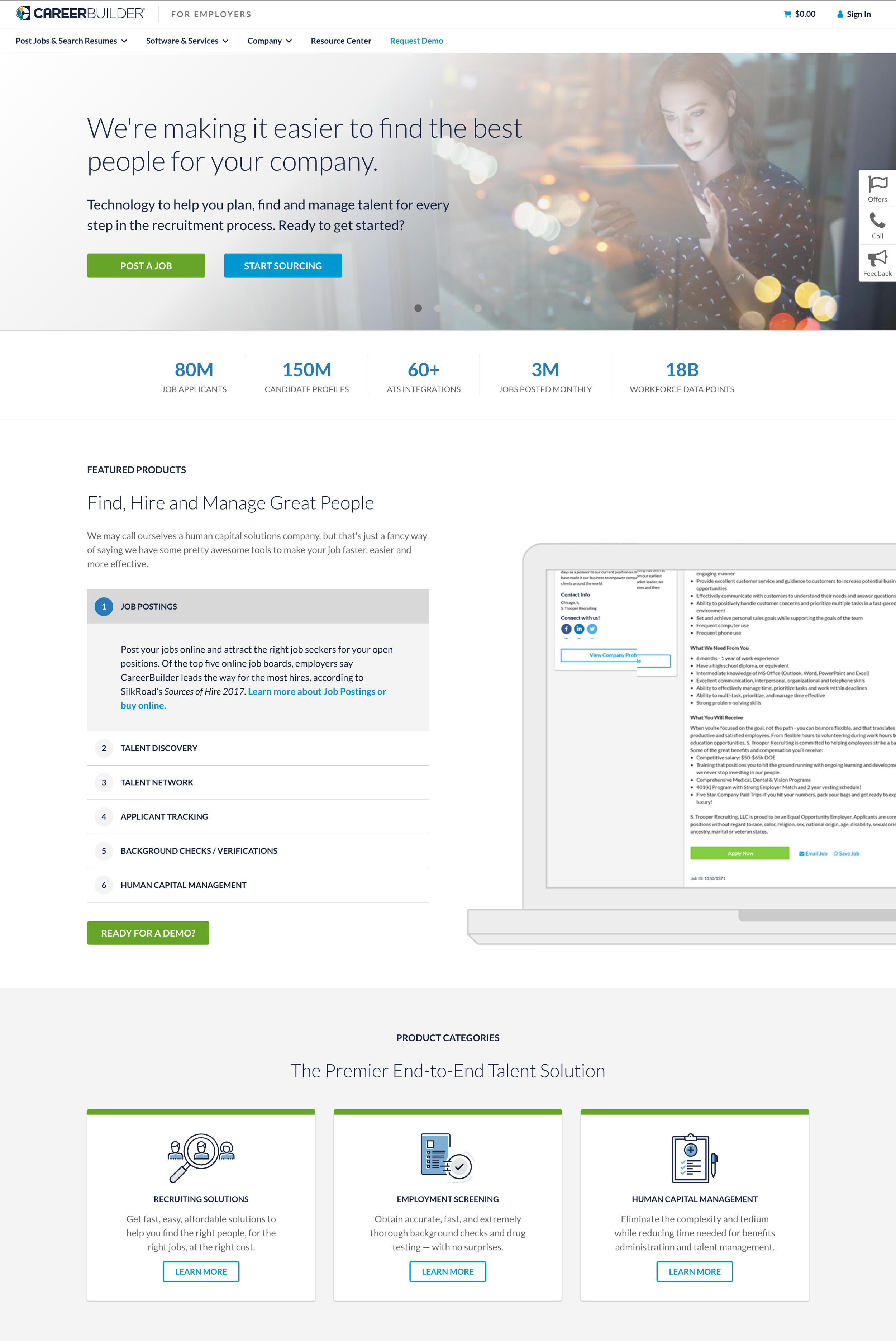
CareerBuilder for Employers became the front door to the B2B business, giving employers a clearer way to understand the company and navigate its recruiting portfolio.
We reorganized product content around customer problems and buying needs, with clearer education, differentiation, pricing, packaging and paths to self-service purchase.
At the same time, we turned the Employer Resource Center into a stronger acquisition engine, connecting editorial content to SEO, search demand, email and CRM nurture, then linking those experiences into product discovery and the broader employer funnel.
E-commerce became part of the same journey rather than a separate destination at the end. We also built abandoned-cart, exit-intent and winback programs to recover high-intent buyers who had not completed a purchase.
Underneath that experience, I brought the systems supporting web, content and commerce under direct ownership. That included product strategy and delivery for Cortex, CareerBuilder's proprietary headless CMS, tracking implementation and Salesforce-connected reporting with Sales and Marketing Operations.
The rebuilt employer e-commerce experience generated $18 million in annual revenue. CareerBuilder for Employers and the supporting content strategy increased lead generation 75% within six months, while 65% of target SEO keywords reached the first page of search results.
The acquisition system was working better. Revenue growth was still flattening.
Finding the Break in the Business Model
With those systems in place, I could see the next constraint clearly: small-business hiring was episodic. A company could go months without needing to recruit, then suddenly need to make a hire quickly. Under the transactional model, that urgency often triggered a new buying process. Customers had to decide which products they needed, secure budget and reacquaint themselves with CareerBuilder while trying to fill a role.
I noticed the same buyers showing up again and again in this pattern. They'd buy a job posting or resume database access, make the hire and disappear from the purchase funnel. When another hiring need came up months later, they usually came back through our new-business funnel, treated as a first-time prospect rather than a customer we already knew.
That told me we were paying close to the same acquisition cost to win back customers we had already earned, while asking them to restart the buying process every time.
I saw the next growth opportunity wasn't more traffic or a better checkout; it was keeping the relationship intact between hiring cycles.
Creating the Subscription Model
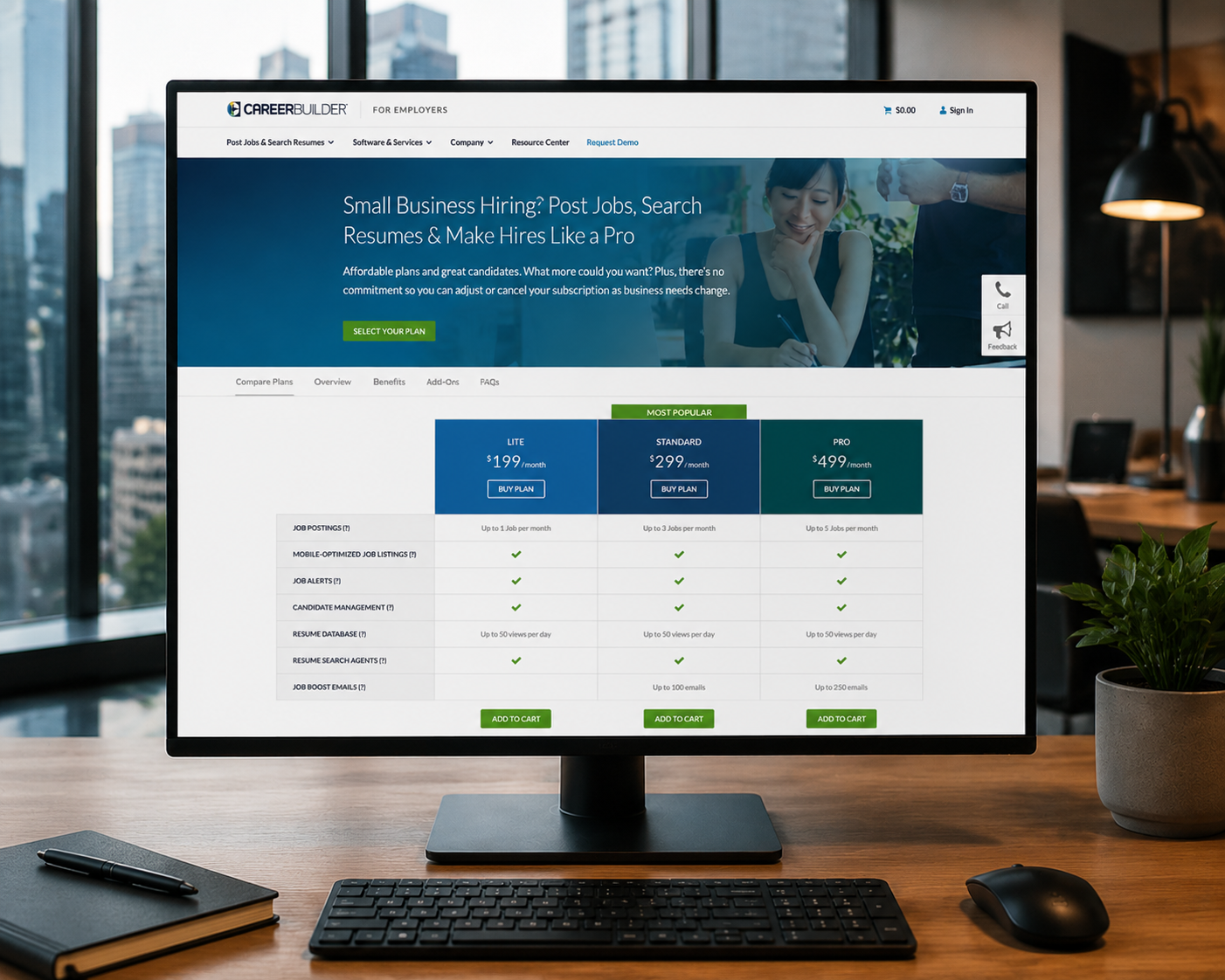
I created CareerBuilder's first small-business subscription model, packaging job postings with resume database access and bringing the new offering to market through the employer e-commerce channel.
Most buyers came to CareerBuilder for job postings. Adding resume database access expanded the value of the relationship beyond an active opening. Customers could post when they needed to hire immediately or search for passive candidates, save prospects and build a talent pipeline ahead of future openings.
The subscription changed what we were asking customers to buy: ongoing access to hiring tools rather than a single recruiting transaction.
Pricing for Continuity
Pricing was central to whether this worked: the subscription cost more than 40% less per month than a single job posting while including more capability, giving customers a practical reason to stay subscribed even without an immediate opening. My team tested pricing aggressively to find the right balance. We accepted less revenue on the first purchase, but by the second month, subscription revenue had already exceeded what we would have earned from a single job posting. Longer retention moved the customer toward our lifetime value target.
We used that experimentation to set the pricing recommendation and brought the model to the executive team for alignment.
We knew the lower monthly price would pull some revenue from existing transactional purchases. That was part of the plan. Keeping a customer subscribed longer was worth more than maximizing any single purchase and then paying to win them back the next time they hired.
Building a Continuous Learning Loop
The subscription work sat inside a broader experimentation program I built across the employer business. My team ran approximately 125 A/B and multivariate tests per quarter across acquisition, pricing, checkout and subscription journeys. We used behavioral and performance data to understand where customers hesitated, how they evaluated products and which commercial choices changed conversion and revenue.
We continued testing the assumptions behind the subscription after launch rather than treating pricing and packaging as fixed decisions.
My Role
As Senior Product Director, Web & E-Commerce, I owned CareerBuilder's B2B digital acquisition and e-commerce business, including the roadmap, budget and P&L. I:
Led the dedicated product, UX, web analytics and engineering team responsible for the employer digital experience
Unified the employer journey across acquisition, product discovery, pricing, checkout, recovery and retention
Directed the rebuild of CareerBuilder for Employers and the connected content and commerce system
Created CareerBuilder's first small-business subscription model and defined the product package and pricing model
Owned pricing and conversion experimentation and brought the subscription recommendation to executive leadership
Built the continuous optimization program across acquisition, pricing, checkout and subscription
Established SEO and organic acquisition strategy
Brought core web, content and commerce technology under direct ownership, including CMS and tracking infrastructure
Results
The employer e-commerce business generated $18 million in annual revenue
CareerBuilder for Employers and the supporting content strategy increased lead generation 75% within six months of the relaunch
The small-business subscription launch increased conversion 300%
The subscription generated $3.4 million in projected annual revenue within its first two months
Roughly 37% of subscribers reached CareerBuilder's lifetime value target within their first year
The experimentation program delivered approximately 125 A/B and multivariate tests per quarter
65% of target SEO keywords ranked on the first page of search results
Why This Matters
I noticed the larger growth problem only once acquisition and the buying experience stopped being the constraint. Revenue was flattening, but the break was not at the top of the funnel. It was in a purchase model that let the customer relationship end after each hiring event.
The retention problem started at purchase.
Changing that meant changing the offer itself: what customers bought, how much they paid and why it remained useful after the immediate need had passed.
I've applied that same read since: when growth stalls, look at the relationship behind the transaction, not the transaction itself.